The SMB Referral System That Actually Works (When Discounts Don’t) | Elite Digital Growth
September 29, 2026 · 5 min read
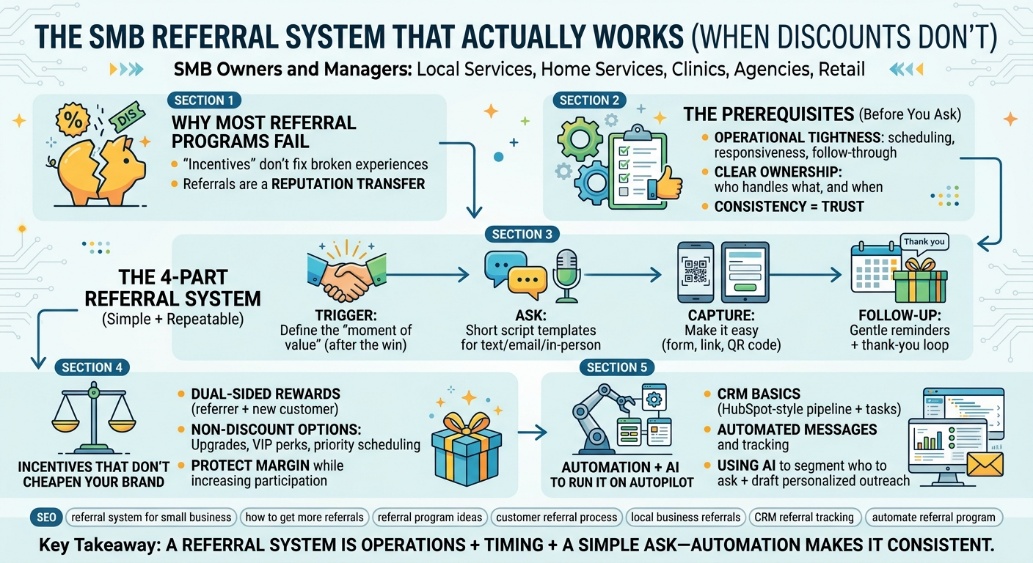
For local services, home services, clinics, agencies and retailers, referrals are among the highest-trust leads a business can earn. But a discount and a “refer a friend” message do not create a reliable referral program. The system works when the customer experience is strong, the timing is right and making an introduction is effortless.
Why most referral programs fail
Incentives cannot repair a broken customer experience. Before someone recommends your business, they put their own reputation on the line. Every referral is a reputation transfer: your customer is telling a friend, colleague or neighbour that you will deliver what you promised.
That is why bigger discounts rarely solve weak participation. If scheduling is confusing, communication is slow or follow-through is inconsistent, customers will hesitate to refer even when a reward is offered.
The prerequisites before you ask
Operational tightness comes first. Scheduling, responsiveness and follow-through need to feel dependable from the customer’s point of view.
Clear ownership matters too. Your team should know who asks for the referral, who receives the introduction and who follows up. Consistency builds trust, and trust is the foundation of a referral system for small business.
The four-part referral system
Trigger. Define the moment of value — the point just after the customer receives a result, expresses satisfaction or thanks your team. This is when the experience is fresh and the referral ask feels natural.
Ask. Keep the request short and personal. In person, by text or by email, explain who you help and make one clear request. For example: “I’m glad we could help. If you know another business owner dealing with the same challenge, would you feel comfortable introducing us?”
Capture. Make the next step easy. Use one short form, direct link or QR code instead of asking the customer to remember details or explain your entire offer. Fewer steps produce more completed introductions.
Follow-up. A gentle reminder can recover referrals from busy customers, but the thank-you loop matters just as much. Acknowledge the introduction quickly, protect the referrer’s trust and let them know their help was appreciated.
Incentives that don’t cheapen your brand
If you use rewards, consider a dual-sided structure that benefits both the referrer and the new customer. This feels more generous than a one-sided commission and gives the new prospect a reason to act.
Non-discount options can be even stronger: a useful upgrade, VIP perk, priority scheduling or added service. These referral program ideas protect margin while still making participation feel worthwhile.
Automation and AI can keep it running
A simple CRM referral tracking process gives every introduction an owner, a status and a next task. Automated messages can send the referral link after the right trigger, remind customers gently and alert your team when a new lead arrives.
AI can help segment the customers most likely to refer and draft personalized outreach based on their experience. It should support the relationship, not replace it. The message still needs to sound like your business and arrive at the right moment.
The takeaway
A referral system is operations, timing and a simple ask. Automation makes the customer referral process consistent. Get the experience right first, then build a repeatable trigger, ask, capture and follow-up process that your team can use every time.
Want help building an automated referral program around your business? Start with a free Snapshot Report.